We’re Glad You’re Here!
Please note that we are currently in the process of updating our articles so that you have the best user experience possible. While you are welcome and invited to read this old article, know that we are working on providing up-to-date resources and citations where appropriate. In the meantime, feel free to check out our latest re-vamped articles:
Food as Medicine: How Diet can Prevent and Manage Disease
Cook through COVID-19: 5 Kitchen Strategies for your Health!
Healthy Grocery Shopping: 5 Strategies to Build a Healthy Cart
Healthy Pantry Staples and Fridge Essentials
Goodbye Recipe Obsession: Learn to Cook without Recipes
Happy reading!
At one time, the word fat was a bad word. Researchers discovered the detrimental health consequences of consuming too much saturated fat, and we took it to the extreme, demonizing all kinds of fats. We correctly added trans fat to the fats to avoid list years later, but still too many people thought we should avoid all fat. What happened with this focus on avoiding fats? People replaced fats with simple or refined carbohydrates. To make food more palatable when the fat was removed, manufacturers added sugar and salt. People were eating foods in excess because they were fat-free, not realizing that many of these foods actually now had more calories! Beyond the heart benefits of healthy fats, there is a reason we add fat to our recipes. 1. Some vitamins require fat to be absorbed in our bodies, and 2. Fat adds satiety and mouthfeel, both very important to help satisfy us at mealtime. Well, it’s time for us to welcome fat back into our meals, but let’s make sure we are welcoming back the right kinds! Let’s review:
- Saturated Fat raises our good cholesterol (HDL), but also raises our bad cholesterol (LDL). Now, not all saturated fats are created equal. They are made up of different fatty acids, some raising our LDL levels more than others. Saturated fats are solid at room temperature and are found in animal products (beef, chicken, pork, dairy) and tropical plants (coconut and palm fruit). I know what you are thinking, isn’t coconut oil healthy for us? As a hair conditioner, skin hydrator, and any other use that involves the outside of your body, feel free to go crazy with coconut oil. As a cooking fat, be cautious. Yes the saturated fat in coconut oil doesn’t appear to be as bad (raises our LDL less), but it is still saturated. It is not the healthiest fat out there, and should be limited to 2 Tbsp/day. Don’t make coconut oil your go to fat, until research tells us more!
- Trans Fat is worse than saturated fat! It raises your LDL and decreases your HDL; that’s double bad! Trans fat is found in a lot of processed foods. Be sure products say 0 grams trans fat and do not list partially hydrogenated oils in the ingredients.
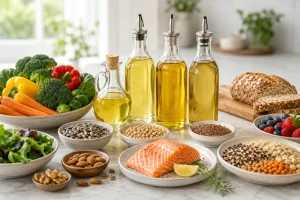
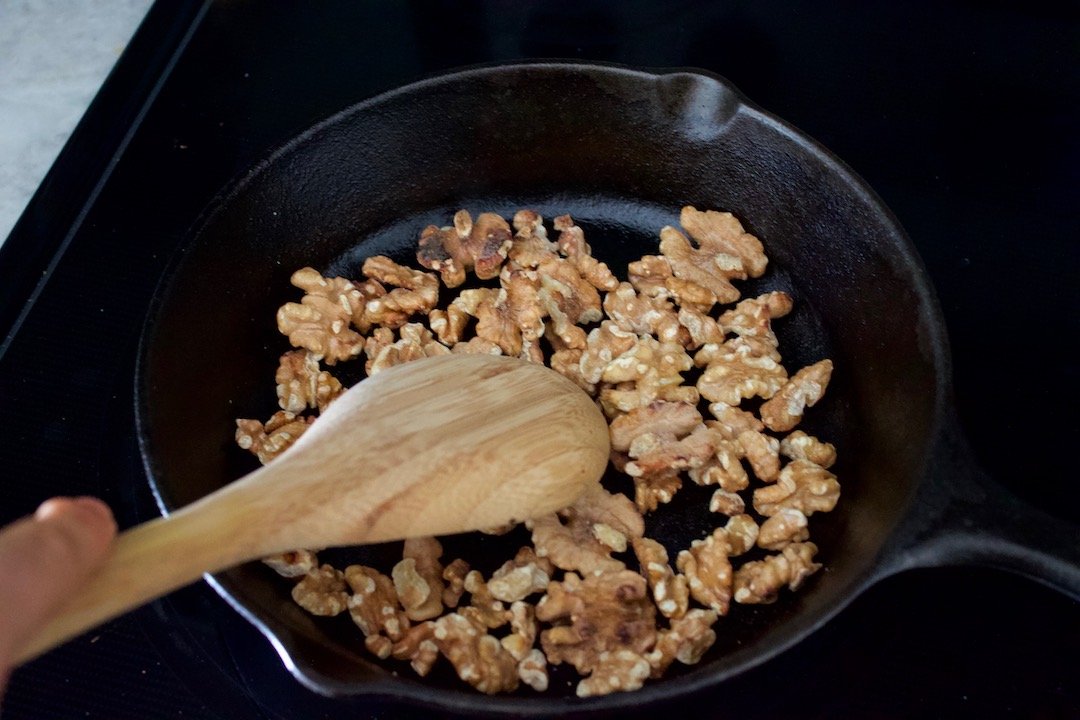
- Unsaturated Fats include polyunsaturated and monounsaturated fats, both heart healthy. These fats are liquid at room temperature and come from plants. Polyunsaturated fats are found in vegetable oils, like canola, soybean, and sunflower. Omega 3s are the type of polyunsaturated fat found in fatty fish (salmon, trout, tuna), nuts (especially walnuts), and flaxseed, and are very good for us; in fact they are essential for us to eat! Monounsaturated fats are found in olive oil, nuts, and avocados. Olive oil is one of the most studied oils, and clearly has heart health benefits.
The key is to focus on choosing healthier fats rather than reducing all fat. Try to include nuts, olives, avocados, fish, and flax seed in your diet. Consider making extra virgin olive oil your go to oil when not cooking at too high of a temperature, and virgin olive oil and canola oil for high heat cooking. And don’t worry, you can still reach for the stick of butter every now and then! I sure do!
To YOUR Taste!
Chef V